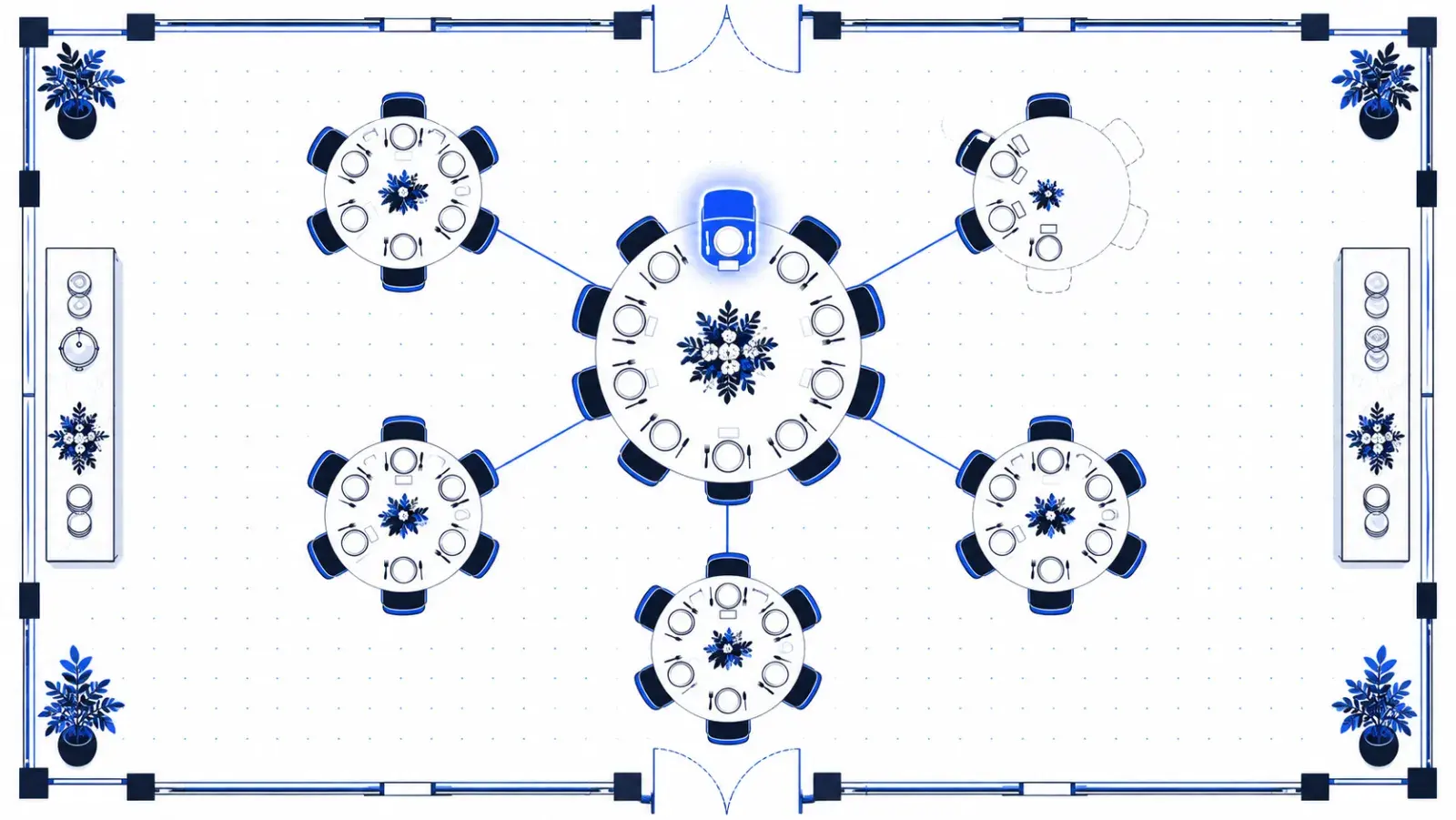

Internal links are the one ranking factor you control completely. No outreach, no approvals, no waiting. Most sites still spend them badly, scattering related-post links that send authority in circles. Google's own rule of thumb is simple: every page you care about should have a link from at least one other page on your site.
Decide which pages are supposed to win
List the handful of pages that make money: the product pages, the pricing page, the two or three comparisons that convert. Everything else on the site exists, in link terms, to support them. On this site that's pricing, the four feature pages and our comparison of AI SEO tools.
Navigational and contextual links
Navigational links live in menus, footers and breadcrumbs and appear on every page. Contextual links sit inside the body text and point to the page that explains the thing being discussed. Navigation tells crawlers what exists. Contextual links tell them what's related and what matters, and they're the ones readers actually click.
Link from the middle of the text
A link inside a sentence is more useful to the reader, and more likely to be clicked, than the same link in a footer block. Write the sentence that earns the link rather than appending "read more" lists.
Use anchor text that describes the destination
| Anchor text | Verdict | Why |
|---|---|---|
| how we track citations across four assistants | Good | Says exactly what the destination page covers. |
| click here, read more, this guide | Weak | Google names these as too generic: they say nothing about the page. |
| the same exact commercial keyword, on every page | Risky | Looks engineered, and Google warns against stuffing keywords into anchors. |
Make sure links are real links
Google can only follow a link that is an a element with an href attribute. A card that navigates through a JavaScript click handler, or a button styled to look like a link, may be invisible to crawlers, and many AI crawlers don't run JavaScript at all.
Check the shape, not just the count
Crawl the site and look at how many clicks it takes to reach each money page from the home page. Anything beyond three usually means the structure, not the content, is the problem. Pages with no inbound internal links at all are invisible to both crawlers and readers.
Search Console's Links report lists your most-linked pages. If a money page isn't near the top, the blog is linking to the wrong places. Google says there's no magic number of links per page, so judge by where they point, not how many there are.
How this blog links its money pages
| Cluster | Hub page | Supporting posts |
|---|---|---|
| AI citations | AI visibility | Generative engine optimization, quotable page structure, measuring citations, llms.txt, AI crawlers in robots.txt |
| Content automation | SEO article writer | Automating without junk, publishing frequency, choosing keywords |
| Internal linking | Internal linking | Topic clusters for a new site, and this post |
| Publishing and schema | Auto-publishing | Blog post schema |
For the planning side, see topic clusters for a new site. For links inside the markup, see the schema every blog post should ship.
Doing this by hand is a spreadsheet job that never ends: every new post needs its money-page link, and every older post in the cluster needs updating to point back. Skip a week and the authority goes back to circling the blog instead of reaching the pages that sell. Our internal linking feature does both on every publish, with anchor text that describes the destination. Pair it with 30 new articles a month, and each one sends authority to at least one money page the day it goes live.
Put every new article to work for your money pages
AutomatedSEO researches, writes and publishes 30 articles a month to your connected CMS.
3-day trial · Cancel any time
Sources
Checked on 27 September 2026.
Written by
Founder and SEO enthusiast
Mielad Niekzad is the founder of AutomatedSEO and an SEO enthusiast.
More from Mielad Niekzad